

Vestibular Rehabilitation: Moving Beyond the Epley Maneuver
What Makes Our Assessment Process Different?
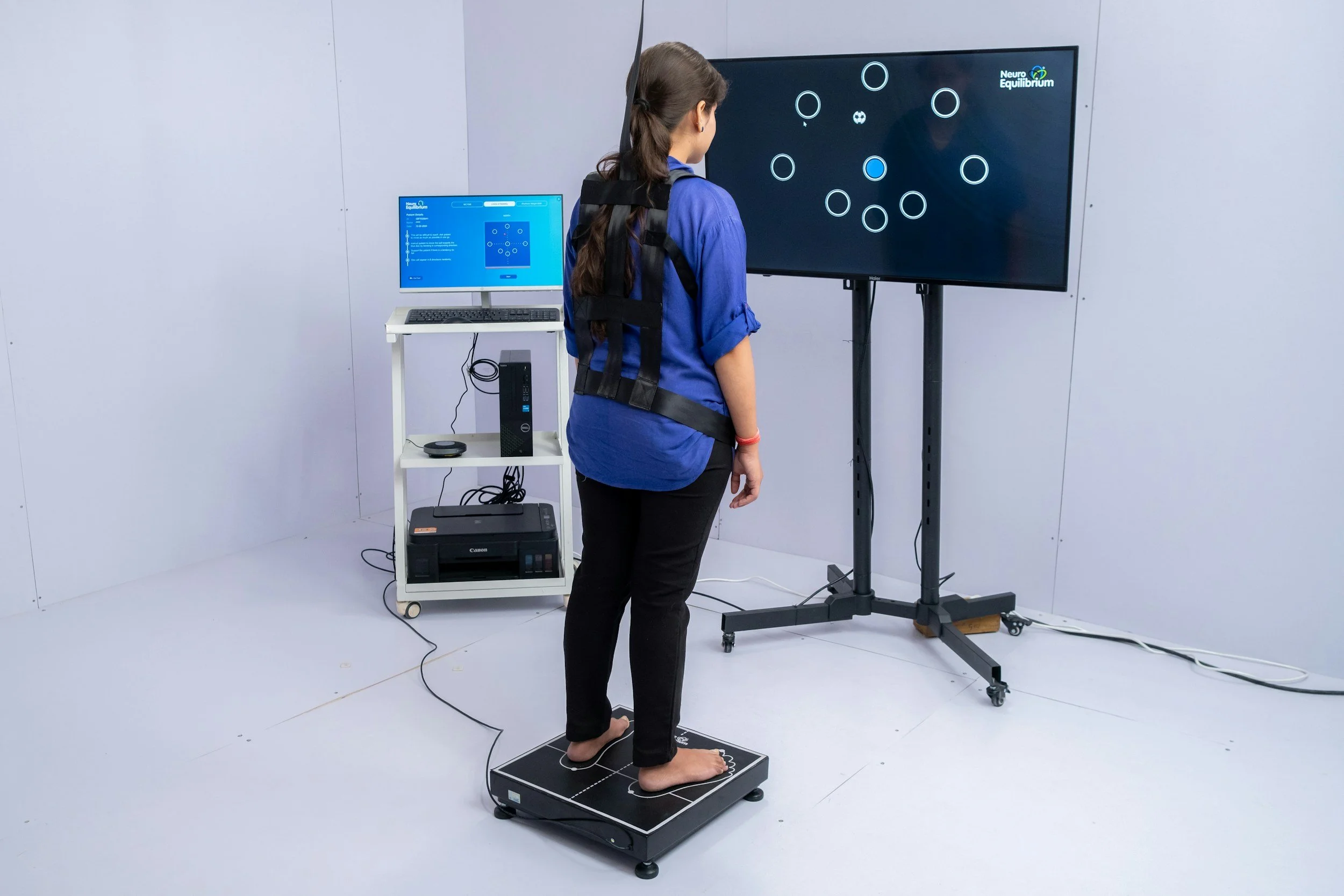
Craig uses advanced tools and testing methods that help identify vestibular issues that may be overlooked in standard assessments. These include:
Infrared Goggles
These goggles remove visual cues that your brain uses to compensate for inner-ear problems. This allows us to see eye movements (nystagmus) that are not visible in normal lighting. Clear observation helps identify:
Whether dizziness is coming from the inner ear or the central nervous system
The exact canal affected in BPPV
Whether the issue is canalithiasis or cupulolithiasis, which require different treatments
Signs of conditions such as unilateral vestibular hypofunction or a possible perilymph fistula that may require medical referral
-Dynamic Visual Acuity (DVA) Testing
-Assesses how well your eyes stay focused while your head is moving.
-Motion Sensitivity Testing
-Identifies dizziness triggered by movement or visual motion.
-Head Impulse Test
-Evaluates how well your vestibulo-ocular reflex (VOR) stabilizes your vision during movement.
-Video Head Rotational Test
-Helps detect if one side of your vestibular system is not functioning properly.
These tools allow for a precise diagnosis, which is essential for creating an effective and individualized treatment plan.
The Damen Optimal Health Team offers a comprehensive Vestibular Rehabilitation Program designed to help people with dizziness, balance problems, and inner-ear disorders. Our program provides care comparable to leading centres in Toronto, Kitchener-Waterloo, and London.
Who Should Consider Vestibular Rehabilitation?
You may benefit from a vestibular assessment if you experience:
Balance or dizziness issues
A history of falls or feeling unsteady
Ongoing dizziness caused by BPPV or other inner-ear conditions
Recovery from inner-ear or neurological events
After an inner-ear infection such as labyrinthitis or vestibular neuritis
After a Meniere’s disease flare-up
After a stroke if balance or dizziness problems persist
Sudden hearing loss in one ear, which can be related to inner-ear injury
Persistent dizziness requiring medication
If you regularly need betahistine refills to manage symptoms
Treatment Options
Treatment programs are personalized and may include:
Repositioning techniques (Epley, Semont, Guffoni, Horizontal Canal maneuvers)
Gaze stabilization and VOR training
Motion sensitivity desensitization exercises
Balance and postural control training
Gaze shifting and vergence exercises, with or without walking tasks
Program Goals
1. Improve access to high-quality dizziness and balance care for individuals in the Huron-Perth region
2. Reduce the need to travel to larger urban centres for assessment and treatment
3. Support more efficient ENT referrals by identifying who truly requires specialized diagnostic testing (VNG, ENG, VEMP, Caloric Testing)
We are committed to helping you reduce dizziness, improve balance, and return to your normal daily activities with confidence.